

OUR SERVICES
Different spaces. Real experiences. Goals that belong to you.
Not everyone learns best sitting across a table, and not every skill makes sense to practise inside a clinic. Our programs give you opportunities to build capacity through movement, community experiences and the things you actually do in everyday life.
Each program looks different because the people who come to us are different. We start with your goals, understand what you are working towards and then use the environment around us to create meaningful opportunities to learn, practise and grow.
The mode of delivery might include movement, dance, catching a bus, ordering lunch or navigating something new.
What you see happening is the activity. What sits underneath it is the learning.

-
Having multiple people involved in your support, or your family member’s support, can sometimes feel like a full-time job in itself. There might be an Occupational Therapist recommending one thing, a school or workplace seeing something different, support workers needing guidance, NDIS paperwork requiring evidence, and someone trying to keep everyone informed and moving in the same direction.
Your Key Worker helps bring those pieces together. They get to know you, understand what is happening across your everyday life and become the consistent person who helps work out what needs attention now.
Sometimes that means working directly with you to build skills. Sometimes it means supporting your family, speaking with school or work, collaborating with therapists, guiding support workers, advocating when your needs aren't being understood, or pulling together evidence for the NDIS.
When things become complicated, your Key Worker can step in more closely. When things are going well, they can step back and stay connected in the background.
Your Key Worker might:
Help build confidence, independence, regulation and everyday life skills
Help you and the people around you understand why something may be happening and what might help
Work with schools, workplaces and community services to help overcome disability-related barriers
Connect with therapists so their recommendations don't just stay in a report
Help support workers understand your needs and use strategies consistently
Bring everyone together when your team isn't on the same page
Advocate alongside you when your needs aren't being understood or met
Step in when a situation becomes complex and help work out what happens next
Gather information and evidence for the NDIS
Prepare Functional Capacity Assessments, reports and letters of support where required
Support transitions such as starting or changing school, preparing for employment, leaving home or moving into adulthood
Doing a budget projection and ensuring the budget stays on track
Think of your Key Worker as the person helping connect the dots, so you and the people who support you don't have to carry every piece alone.
-
Sometimes you know that something is making everyday life harder, but it can be difficult to work out why. You might be seeing big emotions, difficulty with routines, sensory overwhelm, challenges with learning or attention, trouble completing everyday tasks, avoiding certain environments, or simply feeling like everyday things take far more effort than they should.
Your Occupational Therapist helps work out what is happening underneath what we can see. Rather than simply trying to change a behaviour or teach a skill, we look at the whole person. How does your nervous system respond to the world around you? What helps you feel regulated and ready? How do you process information and learn? Are sensory needs, communication, planning, coordination, the environment or the demands of the task making things harder? Once we understand the why, we can work with you and the people around you to find practical ways to make everyday life work better.
Your Occupational Therapist might:
Help understand what may be driving dysregulation, overwhelm or behaviour
Explore sensory needs and what helps your nervous system feel regulated
Build independence with everyday tasks, routines and self-care
Support planning, organisation, attention and completing tasks
Build confidence, coordination and participation in everyday activities
Help identify why school, work, home or community environments may be difficult
Recommend practical changes or adjustments to make environments work better for you
Help families, educators and support workers understand your needs and how best to support you
Develop strategies that can be used across everyday life, not just during therapy
Help you understand your own strengths, needs and what works for you
Build confidence to communicate and advocate for the support or adjustments you need
Complete assessments and provide evidence about your everyday functioning and support needs
Occupational Therapy isn't about changing who you are. It's about understanding what you need to thrive and helping everyday life become more accessible to you.
-
Work starts long before the first day on the job.
Employment isn't just about finding a job. It's about understanding what you're good at, what interests you, how you work best and what you might need from a workplace to thrive.
Our Employment Support is designed to help you build those foundations. Depending on where you are in your journey, we might explore different types of work, identify your strengths and interests, build confidence, practise workplace communication, develop routines, learn to work alongside others, problem-solve, manage tasks or build the everyday independence that helps make employment possible.
And when you're ready, we can take that learning into real environments. That might mean exploring workplaces, preparing for interviews, practising travel to and from work, starting work experience, learning tasks on the job or having someone beside you while you build confidence in a new role. The NDIS can fund employment supports across this journey, including building work skills, finding suitable employment and on-the-job coaching where it relates to your disability support needs.
Just like everything we do at TCB, we also want you to understand yourself along the way. What kind of environment brings out your best? How do you learn a new task? What helps when you're overwhelmed? How do you communicate that you don't understand? What adjustments help you do your best work? What are you brilliant at?
Because getting a job is only one part of the goal.
We want to help you understand what you bring to the workplace, build the skills to get there, and have the confidence to advocate for what you need once you arrive.
-
Movement with a purpose.
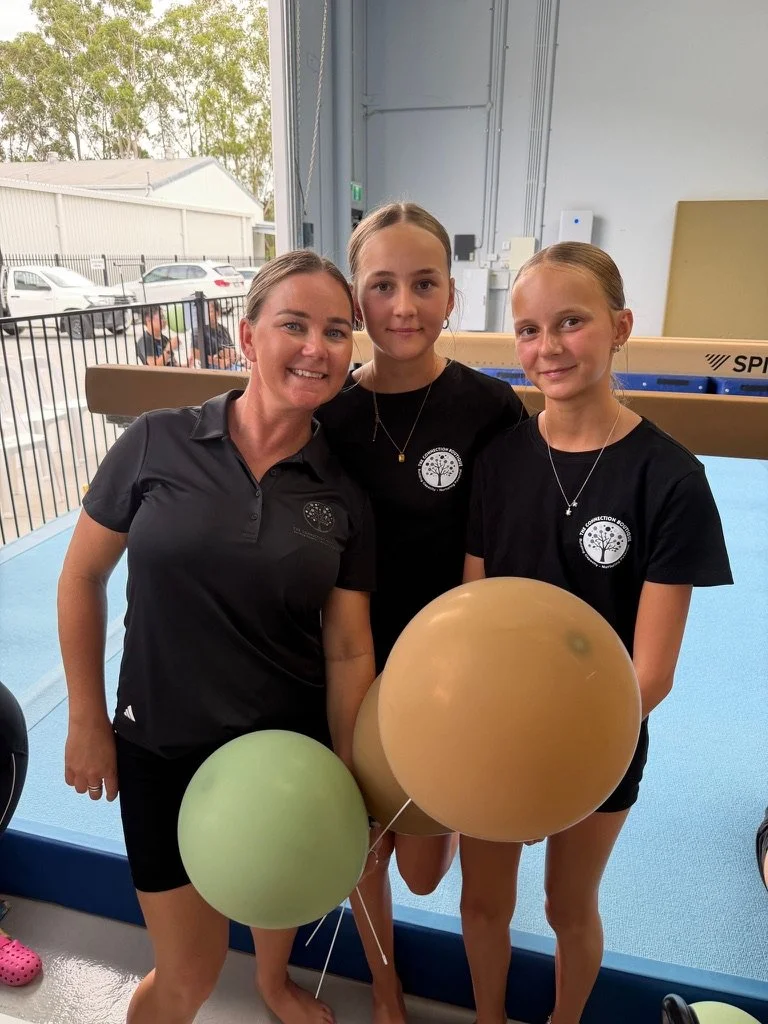
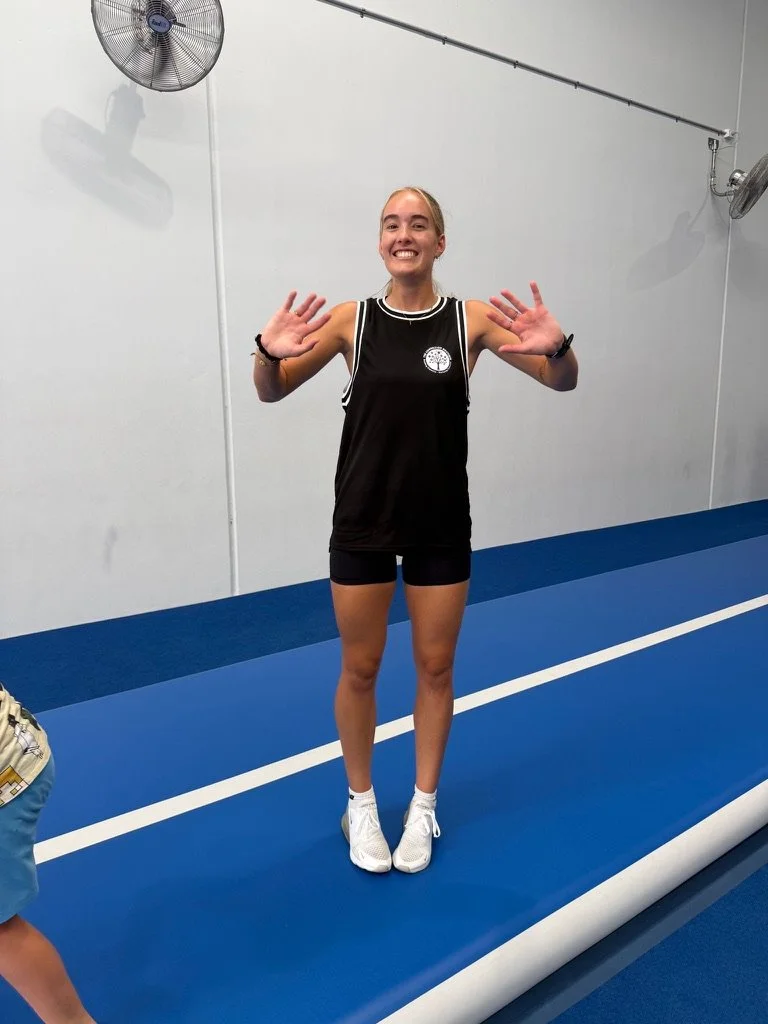
Core Connections is our movement-based Therapy Assistant program, delivered within a gymnastics environment. But you don't need to be a gymnast, and learning gymnastics isn't the goal.
Movement gives us an incredible environment to work on the skills that matter to you. Depending on your individual goals, a session might create opportunities to build confidence, communication, motor planning, regulation, attention, problem solving, social interaction, following a sequence or advocating for what you need.
You might be climbing, swinging, balancing or building an obstacle course, while underneath that activity you are learning to make choices, work alongside someone else, recognise when you need a break, persist when something feels difficult or confidently say, “No thanks, I'd rather do something else.”
As skills grow, we can also introduce shared sessions and small groups where appropriate, creating natural opportunities to practise alongside others.
Using movement for engagement, we create real opportunities to practise, build skills and grow capacity in ways that carry into everyday life.
-
Building skills where life actually happens.
Community Connections takes capacity building out into your world. Sessions are designed around your individual goals and the places, activities and experiences that are meaningful to you.
You might be learning to shop independently, use money, order food, plan an outing, travel somewhere, communicate with unfamiliar people, build confidence in new environments or work through what happens when plans unexpectedly change.
Being in the community also helps us discover what actually works for you. Maybe having a plan beforehand makes things easier. Perhaps you need more processing time when somewhere is busy. You might discover that you can do much more independently than you thought, while still wanting support nearby for particular situations.
We aren't practising community participation in a room and hoping it works later.
We are learning with you in the places where you actually want to use the skill.
-
Connection, confidence and expression through movement.
Danceable Connections is delivered in collaboration with Danceable and uses dance, music and creative movement as a way to connect, participate, build confidence alongside others, all while quietly building capacity.
Depending on what you are working towards, dance is used as a mode of engagement to create natural opportunities to develop body awareness, coordination, communication, confidence, regulation, social connection and participation within a group. The goal isn't for everyone to dance the same way. It’s for skills to be built in a fun and engaging way.
You might love performing and being front and centre. You might prefer to participate quietly alongside others. You may communicate easily through words, or find that music and movement give you another way to express yourself.
There is room for all of that.
Being part of something doesn't require everybody to participate in the same way.
What is a Therapy Assistant Program?
More opportunities to practise, with professional guidance behind every session.
Our Therapy Assistant Programs give you more opportunities to build and practise skills through meaningful, everyday experiences, without every session needing to be delivered directly by an Occupational Therapist or Educator.
Before support begins, our Educators and Occupational Therapists work collaboratively to understand your goals and develop a program around the areas that matter to you. Your Therapy Assistant then brings that program to life, whether that is through movement, community activities or other real-life experiences.
After every session, your Therapy Assistant completes detailed case notes about what happened, what they observed, what worked and where support was needed. Our professional team uses this information to provide ongoing guidance, adjust strategies and track your progress over time.
This means your Therapy Assistant isn't working alone. There is professional thinking happening behind the scenes, while the Therapy Assistant creates regular opportunities to put that thinking into practice.
And because we are collecting information along the way, we can see whether things are actually changing. If something is working, we build on it. If it isn't, we can adjust the approach.